What if the future of freight isn’t about owning more equipment but using it smarter? The U.S. trucking industry needs better ways to transport goods because shippers and carriers require improved delivery options. Companies must develop new transportation systems to handle their growing shipment needs and overcome rising logistics costs and their need for quick deliveries.
That’s where power only loads are gaining momentum. Instead of managing trailers, carriers simply provide the truck and driver while the trailer comes from the shipper or logistics partner. The organization will achieve better performance through this straightforward change which improves operational efficiency and decreases time needed for task completion. The expansion of freight networks has made power only freight dispatching a flexible business solution which requires no extra equipment costs. Let’s break it down further.
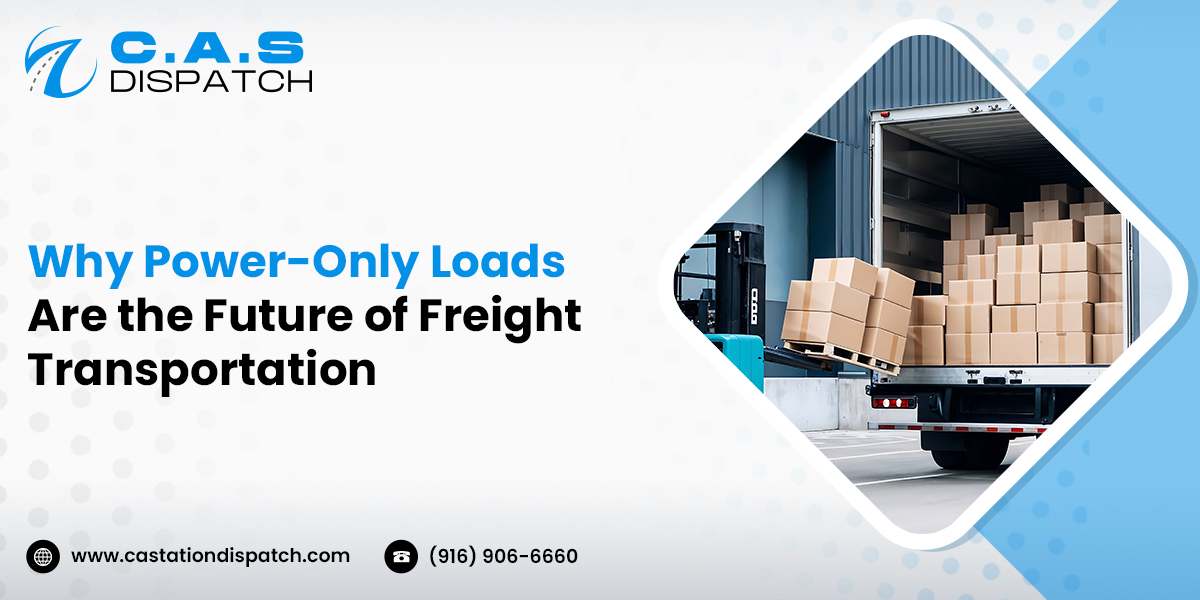
Power only loads are a trucking method where the carrier provides the tractor unit and driver, while the trailer belongs to the shipper or logistics partner.
In traditional trucking, carriers often need to manage trailer storage, maintenance, and availability. Power-only transportation removes much of this burden.
The process is usually straightforward:
This model is commonly used in drop-and-hook operations, which help reduce waiting time at shipping docks. According to the American Trucking Associations, trucking moves about 72% of freight tonnage in the United States, showing how important efficiency improvements are for the industry.
Efficiency is one of the biggest reasons carriers prefer power-only freight dispatch. Trucks spend less time waiting at warehouses and more time on the road. Modern logistics is about keeping vehicles moving rather than keeping them parked.
Owning trailers can be expensive. Maintenance, storage, and repair costs add up over time. Power-only operations allow carriers to focus on transportation instead of equipment management.
North American trucking operations face ongoing difficulties because of their ongoing driver shortage problem. Research from the transportation industry demonstrates that shorter waiting times lead to higher driver satisfaction together with better operational performance results. Continuous movement provides drivers and owner-operators with improved opportunities to earn money.
Professional dispatch support plays a silent but important role behind successful power-only operations. A good freight dispatching company helps carriers find suitable loads, communicate with shippers, and manage transportation schedules.
Platforms like CA station dispatch are showing how technology can simplify freight matching.
| Factor | Traditional Trucking | Power-only Transportation |
| Tailor Ownership | Required | Not Required |
| Loading method | May require waiting | Often drop-and-hook |
| Operational cost | Higher | Relatively lower |
| Flexibility | Limited | Higher |
| Turnaround Time | Slower | Faster |
This comparison shows why many logistics businesses are exploring power only freight dispatch models.
The future of logistics is already transitioning into advanced transportation systems which utilize smarter technology and lighter equipment.
Freight coordination receives better results through the combination of real-time tracking systems and load matching algorithms and digital communication tools. Modern transportation systems use data analytics to assist businesses in predicting demand while they create optimized routing solutions.
Many companies are shifting away from heavy equipment ownership. Instead, they prefer flexible transportation networks. This trend supports scalability because businesses can expand shipping operations without investing in large trailer fleets.
Transportation efficiency is also connected to environmental goals. Reducing idle truck time helps lower fuel consumption and supports greener logistics operations.
Industry reports suggest that long-haul trucks in the U.S. consume over 1 billion gallons of fuel per year while idling.
E-commerce growth has changed customer expectations. Fast delivery, reliable transportation, and consistent supply chain performance are now essential.
Power-only transportation works well for:
Asset-light transportation models are expected to grow as logistics companies search for operational simplicity and better cost control.
Working with a professional dispatch partner can make transportation management easier for carriers. A reliable dispatch service helps find consistent power-only load opportunities, reduces empty miles, and improves communication between drivers and shippers.
If carriers want to scale their transportation business without operational stress, professional freight dispatching support can be a practical choice.
The United States freight transportation system will undergo changes because power only loads will become more important in the future. The model delivers three benefits which include operational efficiency and cost reductions and quicker delivery times.
The power-only freight dispatch system will gain wider usage in supply chains as logistics networks expand and technology progresses.
The transportation method offers flexible solutions which enable better operational management for carriers and shippers who explore this option.
Contact CA Station Dispatch to discover effective dispatch solutions which will enhance your power-only freight operations.