Professional straight box truck dispatch solves this problem by connecting drivers with premium freight. It manages complex paperwork and optimizes routes to ensure every mile driven generates revenue. While many drivers struggle with low-rate boards, a dedicated dispatcher leverages industry relationships to keep your operations running at optimal profitability.
However, running a trucking business involves more than just driving. You often face the stress of negotiating with brokers who offer below-market rates. Furthermore, the administrative burden of billing and compliance often affects your rest hours. To better understand this, let’s examine how professional logistics dispatch services act as your back-office engine.
A straight box truck is a single-chassis vehicle, usually 16 to 26 feet long, where the cargo box attaches directly to the frame. These trucks excel in last-mile deliveries and urban navigation because they offer more agility than semi-trailers. Since many models do not require a Commercial Driver’s License (CDL), they are accessible for new owners. However, their unique size requires specific freight targets to ensure you maintain high revenue-per-mile through consistent, high-velocity movements.
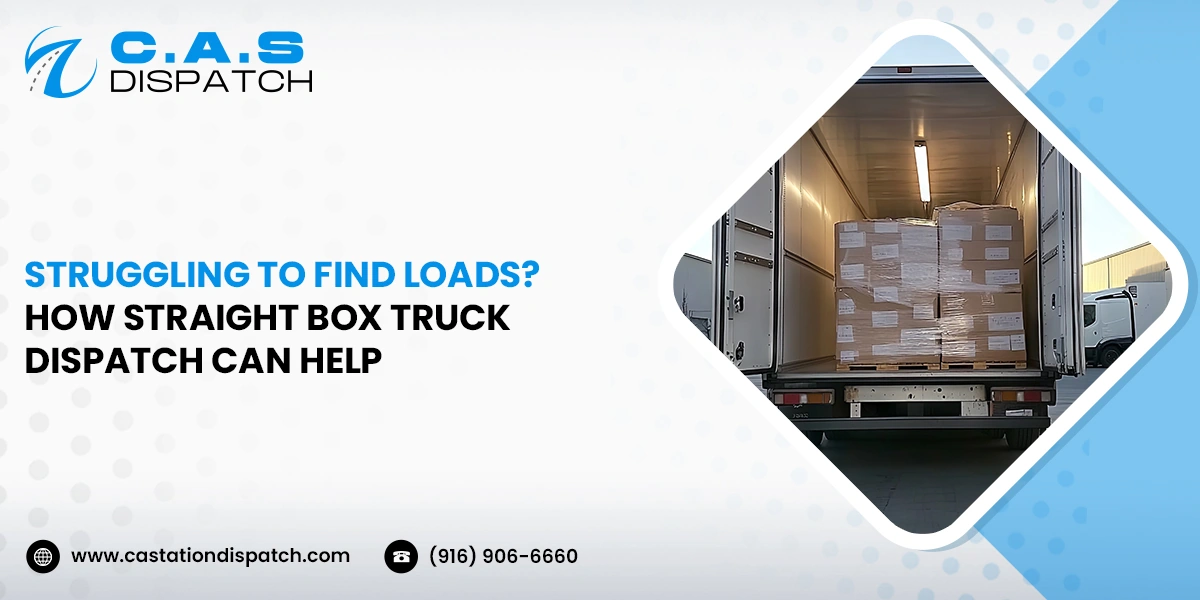
In this context, straight box truck dispatch acts as your professional back-office to secure this specialized freight. While you drive, your dispatcher negotiates with brokers and monitors private networks for premium loads. They handle all administrative burdens, including setup packets, insurance certificates, and billing. By planning your next move before you offload, they eliminate deadhead miles and maximize your daily profit.
Outsourcing your load-finding process offers several strategic advantages. It allows you to operate with the efficiency of a larger fleet. You gain a level of professionalism that makes an impact on high-value shippers.
| Feature | Self-Dispatching | Professional Dispatch |
| Load Quality | Limited to public boards | Access to private networks |
| Admin Tasks | Driver handles everything | Dispatcher handles all office work |
| Average Rate | Market average or lower | Negotiated premium rates |
| Stress Level | High (Multi-tasking) | Low (Focus on driving) |
| Billing Speed | Delayed by paperwork | Immediate upon delivery |
Every mile your truck moves without cargo is a direct hit to your profit. According to data from the American Trucking Associations (ATA), operational costs per mile have risen steadily. This include fuel, maintenance, and insurance premiums. If you are driving deadhead miles to find a better area, you are essentially paying to work.
In addition, missed opportunities also cost you money. If you spend three hours searching for a load, those are three hours of potential driving time lost. Therefore, a dispatcher ensures that your next load is booked before you even reach your current offload point. This operational continuity directly impacts fleet profitability and long-term scalability.
Deadheading is more than just wasted fuel. It is also an opportunity cost. Every hour spent deadheading is an hour you could have spent on a paid haul. Professional dispatchers calculate the cost-to-move. They recommend only those moves that align with your cost-to-move thresholds for your specific truck.
By securing backhaul loads, dispatchers ensure your truck stays loaded for the return trip. They analyze the destination of your first load and find a second load nearby. This creates a loop that maximizes your earning potential for the entire trip.
Professional negotiators often secure rates that are 15% to 20% higher than what an unassisted driver might find. They know when a broker is desperate to move a load. They use this leverage to demand a premium price.
Dispatchers ensure that fuel surcharges are correctly calculated and added to your rate confirmation. With fuel prices fluctuating, these surcharges are vital for maintaining your profit margins.
By handling billing and factoring paperwork immediately, they speed up your cash flow. You do not have to wait weeks for a check. Most carriers receive funds within 24 to 48 hours.
With the office work handled, you can focus on fleet expansion instead of administrative workload. A dispatcher can manage multiple trucks for you. This allows you to grow your business without increasing your personal workload.
Modern dispatching is not just about phone calls. It relies on sophisticated software. Advanced Transportation Management Systems (TMS) allow dispatchers to track market trends in real-time. They use heat maps to see where freight demand is highest.
Digital freight matching tools use algorithms to pair your specific truck capacity with available cargo. This precision reduces the risk of weight or dimension issues at the loading dock. For those in the construction sector, using box truck freight services for precise project estimates can further streamline how you bid on specialized hauling jobs. Technology ensures that no detail is missed. This includes ELD compliance and automated invoicing.
That said, not all logistics dispatch services offer the same value. You should look for a partner who offers transparency and consistent communication. They should treat your business like their own.
Most reputable box truck freight services charge a flat percentage per load. This usually ranges from 5% to 10%. Avoid those with hidden subscription fees. You should only pay when you are making money.
You should always have the final say on whether you take a load or not. If a load takes you to a region you dislike, you should be able to decline it without penalty.
Ask how long they have worked specifically with box trucks. The box truck market differs significantly from the 53-foot dry van market. Box trucks often deal with tighter spaces and residential deliveries. Your dispatcher must understand these constraints.
Understanding how truck dispatch services improve fleet profitability is essential for any partner. They should provide you with weekly reports on your performance. This data helps you make better business decisions.
Many truck owners try to “save money” by doing everything themselves. However, this often leads to expensive errors that cost more in the long run.
Using a dispatcher prevents these pitfalls. They provide a professional buffer between you and the broker. They keep your reputation spotless.
To evaluate whether dispatch is a worthwhile investment, consider the following financial breakdown. If a dispatcher charges 7% but helps increase your total weekly revenue by 20% through better rates, the service pays for itself. You also save on fuel costs by reducing empty miles.
Moreover, consider the value of time. If you save 15 hours of administrative work per week, what is that worth to you? For most, it means more time with family. For others, it means more time spent on vehicle maintenance. Professional dispatching is an investment in your company’s scalability. Whether you are hauling general retail goods or specialized materials for firms like Constructem, the efficiency gains are undeniable.
E-commerce demand has significantly reshaped modern logistics operations. Consumers expect fast delivery for everything. This has increased demand for box truck capacity. However, you must be in the right place at the right time.
Dispatchers use market data to position you there. For example, if a major construction project starts in a specific city, companies like Constructem might need steady hauling for materials. A dispatcher identifies these trends before they happen. They book your loads in advance to capitalize on high demand. This proactive approach is the key to surviving market fluctuations.
Data is the new oil in the trucking world. Professional dispatchers track your miles per gallon vs. your rate per mile. They help you identify which routes are actually profitable. Sometimes a high-paying load is a bad choice if it takes you to a low demand freight market.
Your dispatcher acts as a consultant. They suggest changes to your operation that save money. This might include changing your fuel card provider or finding a better insurance rate. This holistic approach to fleet management ensures long-term viability.
Straight box truck dispatch is more than just a convenience. It is a strategic necessity for growth in a competitive market. By delegating the complex tasks of negotiation and logistics, you position your business for long-term success. You gain access to better freight, higher rates, and a more predictable schedule.
That’s where professional dispatching provides the support you need to scale from one truck to a full fleet. To see how we can help your business thrive, visit CA Station Dispatch website. Follow us on Facebook and Instagram for daily industry updates and tips for truck owners. Your journey toward a more profitable fleet starts with the right partnership.
You can secure loads by utilizing premium digital load boards and networking with local freight brokers. Many operators also find success by targeting last-mile delivery contracts with large retail distributors.
Hiring a professional dispatch service is the most efficient way to outsource load finding. These experts act as your back-office team, sourcing high-paying freight while you focus on safe driving.
Securing direct contracts requires building strong relationships with local manufacturers and shippers. You should present a professional portfolio that highlights your reliability, specialized equipment, and consistent on-time delivery record.
Dispatchers utilize a combination of private carrier networks, established broker relationships, and advanced logistics software. They track real-time market trends to position your truck in high-demand zones for maximum profit.
Dispatchers provide access to freight that never hits public boards. They eliminate your downtime by pre-booking your next haul and managing all the complex negotiations and administrative paperwork.
You can register through our official website or contact our team directly via email or social media. We require your MC authority, insurance certificate, and W-9 to begin booking your freight.
These platforms use data-driven algorithms to match your truck’s specific dimensions with available cargo. They streamline the process by centralizing communication, route optimization, and digital documentation in one accessible location.
Successful negotiation involves leveraging current market data and highlighting your truck’s specific features, like lift gates. A professional dispatcher uses these details to advocate for rates that exceed the market average.