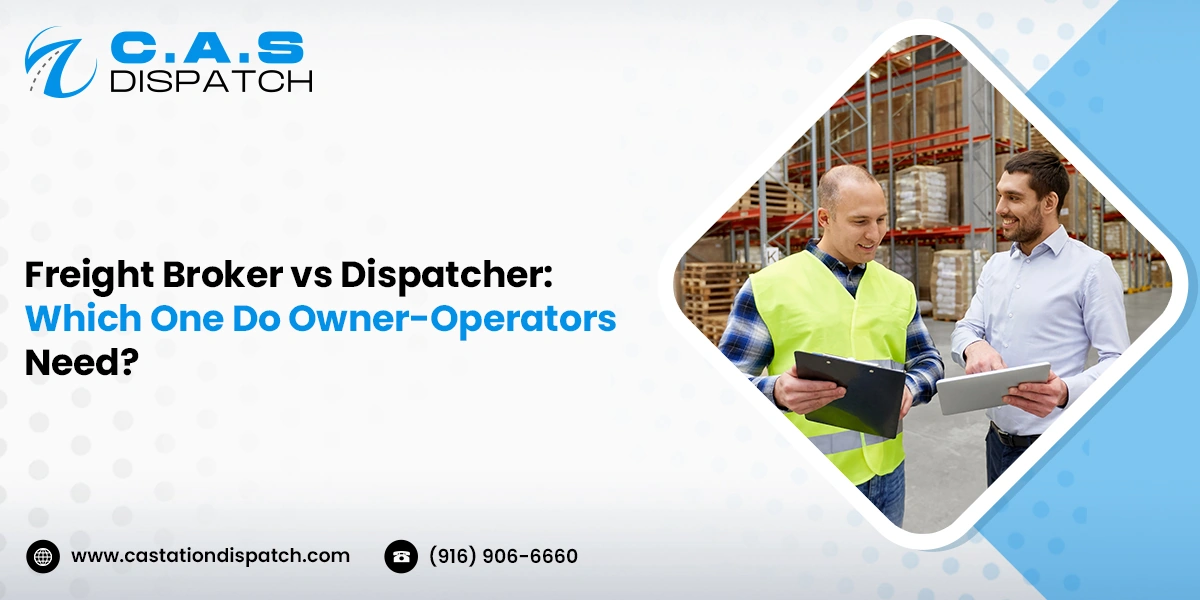
In 2024, the American Trucking Associations (ATA) reported that trucks moved 11.46 billion tons of freight, accounting for over 72% of all domestic tonnage. For owner-operators navigating this massive market, the pressure to keep wheels turning profitably is relentless. You are managing a small business on 18 wheels. This brings up a critical crossroads: should you partner with a freight broker or hire a dispatcher? Understanding the freight broker vs. dispatcher dynamic can be the difference between a high-margin haul and a deadhead nightmare. How to Choose the Right Independent Box Truck Dispatcher?
Before you choose a side, you must understand exactly what these professionals do for your business. While both play a role in moving cargo, their loyalties and legal obligations sit on opposite sides of the table.
A freight broker functions as a middleman who establishes connections between two parties. A broker who holds a license from the Federal Motor Carrier Safety Administration (FMCSA) acts as a shipping representative for the shipper. Their primary goal is to find a reliable carrier to move their client’s goods at the best possible price. Therefore, the company acts as a transaction facilitator which charges a fee that constitutes the difference between their payment for services and the amount the shipper pays.
An independent dispatcher acts as your personal representative or “agent.” The dispatcher operates as an employee who serves either the owner-operator or the trucking company while brokers function as independent agents. Their job involves scouring load boards, negotiating the highest possible rates on your behalf, managing your paperwork, and handling back-office logistics. They earn a flat fee or a percentage of your load, meaning their paycheck increases only when yours does.
Choosing between these two depends on how much control you want over your daily operations. Here’s a clear comparison:
| Feature | Freight Broker | Independent Dispatcher |
| Who they represent | The Shipper | The Carrier (You) |
| Primary Goal | Minimize shipping costs for clients | Maximize revenue for the driver |
| Legal Status | Must have FMCSA Broker Authority | Usually operates under the carrier’s authority |
| Payment Source | Keeps a portion of the shipper’s payment | Takes a percentage or flat fee from the carrier |
| Service Scope | Provides the load only | Provides loads, billing, and back-office support |
| Invoicing | The broker pays the carrier | You pay the dispatcher for their service |
The short answer: you need access to one and may benefit from the support of the other. Most owner-operators rely on freight brokers for their actual freight. Unless you have secured “dedicated lanes” directly with a manufacturer, you will likely spend most of your career hauling broker-provided loads. According to DAT Freight & Analytics, millions of loads are posted to digital boards daily, and brokers manage the vast majority of these spot-market opportunities. You need them because they control the inventory.
However, needing a dispatcher is a matter of administrative preference. If you enjoy spending hours on load boards, calling brokers, and filling out packet after packet of insurance and W-9 forms, you might not need a dispatcher. But if you find that administrative tasks eat into your driving hours (and therefore your revenue), a dispatcher becomes an investment. They ensure you aren’t sitting idle or accepting low-paying freight just because you are too tired to keep looking.
It is a mistake to view this as an “either-or” situation. In a healthy logistics ecosystem, brokers and dispatchers work in tandem to keep the supply chain moving.
When a dispatcher calls a broker, they are essentially acting as your salesperson. The broker has the load, and the dispatcher sells your equipment and reliability to get that load. Because dispatchers build long-term relationships with reputable brokers, they can often skip the public load boards and get “first dibs” on high-paying freight before it even hits the internet.
This partnership benefits you because the dispatcher handles the aggressive negotiation. They know the current market rates per mile and help prevent brokers from offering below-market rates on a heavy haul or a difficult route. While the broker ensures the cargo moves, the dispatcher ensures your business stays profitable.
At the end of the day, freight brokers provide the opportunity, while dispatchers provide the strategy. If you have the time and patience to manage your own back-office operations, you can work directly with brokers and keep more of your gross pay. However, if you want to focus entirely on the road and leave the paperwork to a professional who fights for every cent, hiring a dispatcher like CA Station Dispatch can be a smart move to scale your business. Contact us to get started and streamline your operations.
No. Two positions perform distinct functions. A broker represents the shipper and provides the cargo, while a dispatcher works for the carrier to find and negotiate those loads.
Yes, most owner-operators need brokers to access freight. Brokers control a massive portion of the market, making them essential for finding consistent loads on the spot market.
The use of dispatchers helps owner-operators to work more efficiently because dispatchers handle all operational activities of their work. The dispatcher manages all essential work which includes load searching and document handling so that drivers can concentrate on their driving tasks.
Independent dispatchers provide services to trucking companies and owner-operators to help secure the best freight opportunities from brokers.